
What Thousands of AI Storage Calls Reveal About How Tenants Behave
About 3 in 4 calls to a self-storage facility come from existing tenants. About 1 in 3 is about money. The patterns inside thousands of real AI calls don't match what the industry's annual conferences talk about, and they redraw the job of a self-storage front desk.
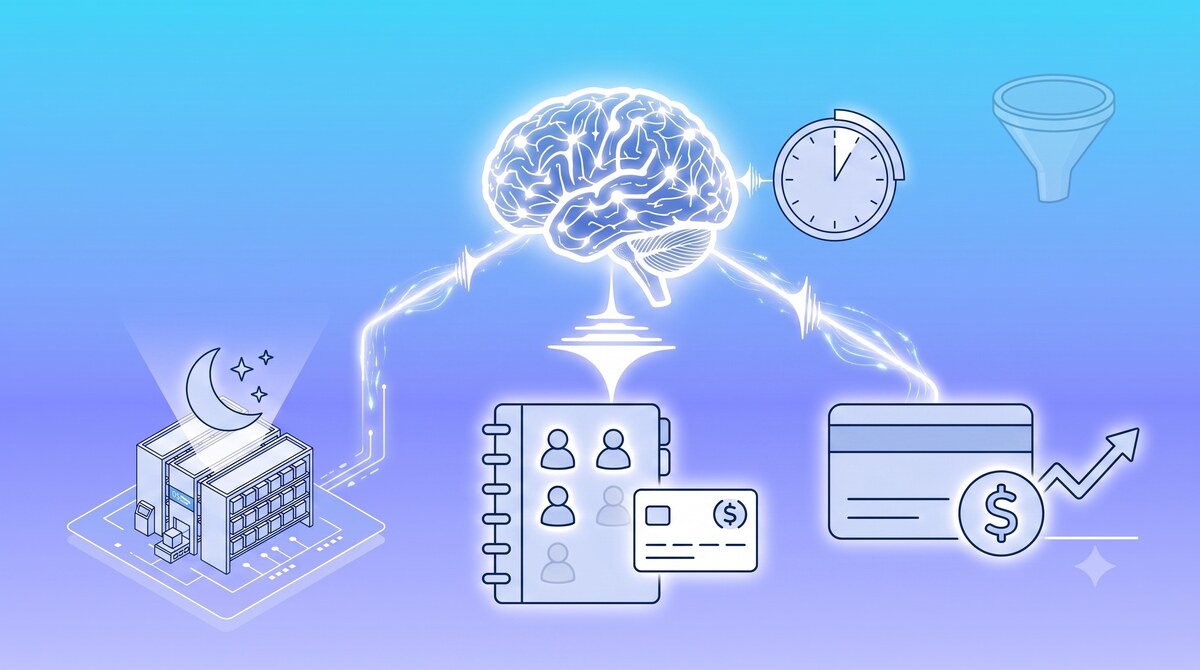
It's Sunday at 6:42 PM. A tenant calls a storage facility in Indiana. She wants to pay her balance before the late fee posts at midnight, and there's nobody at the office. By the time her call would have gone to voicemail two years ago, the AI has already taken the card, applied the payment to her ledger, and offered her autopay. Total time from greeting to goodbye: 71 seconds.
Multiply that interaction across thousands of calls, nearly a dozen operators, and every hour of the day, and you start to see what self-storage actually looks like when AI is answering the phone. The patterns don't match what most operators expect, and they don't match what the industry's annual conferences talk about.
Here's what the call data shows, and what it reveals about how the work of running a storage facility is actually changing.
Most storage calls aren't sales calls
Walk into any self-storage GM's office and ask what their phone is for, and you'll usually hear about leads. New tenants. Move-ins. The funnel.
The data tells a different story. About 3 out of 4 calls to a self-storage facility come from existing tenants. New leads make up roughly 1 in 16. The rest are wrong numbers (about 1 in 13 of all volume), contractors, vendors, and the occasional misdial.
This shifts the entire framing of what a storage phone system is for. If three-quarters of your inbound is people who already pay you, you're not running a sales operation. You're running a service operation, and your phone is closer to a help desk than a lead-gen funnel. The vendors who only optimize for new-lead capture are solving roughly 6% of the volume.
The biggest single call type is money
The category that surprises operators most when they look at their own call data: payments.
About 1 in 3 calls to a self-storage facility is about a payment in some form. Paying a balance. Asking why a card was declined. Updating a card. Disputing a fee. The payment cluster (request, issue, rate dispute) is larger than every other category, including leasing, gate access, and complaints combined.
> Before: A tenant calls on the 5th of the month to pay. Hold time is 4 minutes. By the time someone picks up, the tenant has hung up. Two days later, the auto-late fee posts. Now the call comes back as a complaint, not a payment. > > After: Same call, no hold. The AI takes the card, applies the payment to the ledger before the cutoff, and offers autopay for next month. Average resolution time is under 2 minutes.
Nearly 3 in 4 payment calls are deflected from staff entirely. That's the largest single source of returned staff time across the whole call corpus. Operators who track this number on their own call data usually find it's where AI pays for itself.
A third of every call lands outside business hours
Roughly 1 in 3 calls to a self-storage facility comes in when the office is closed. Evenings, weekends, overnight.
That's not a surprise on its own. What surprises operators is the type of after-hours calls. They're not all gate codes. Tenants pay bills at 9 PM. Prospects ask about availability at 11 PM. Contractors need access at 4 AM. Move-out notices get phoned in at 1 AM after someone decides during a sleepless night that they're done with the unit.
Without AI on the line, that entire third of the volume becomes voicemail or a missed call. With AI, most of it resolves before anyone wakes up the next morning. Among gate-access calls specifically, roughly 1 in 3 lands outside business hours, and those are the calls operators say they used to dread the most.
When AI does answer, the call doesn't take long
The average AI-handled call across thousands of real calls is under 90 seconds. The median is even shorter, around a minute. Roughly 80% of calls finish in under two minutes.
This goes against the intuition operators bring to AI. The fear is that the agent will "stall" tenants, ask too many bad questions, or send them in circles. The data shows the opposite: AI compresses the interaction. It picks up immediately, identifies the issue in the first ten seconds, takes the action, and wraps up.
For a tenant who just wants to pay $87 and go back to whatever they were doing, that compression is its own customer-experience win. Nobody calls a storage facility for a chat.
Nearly 6 in 10 calls don't need a human at all
Across nearly a dozen operators using Lumio, nearly 6 in 10 calls are deflected from staff entirely. The team's phone never rings. The work gets done, the ledger gets updated, and the tenant gets what they came for.
The other 4 in 10 get routed to staff with full context already gathered: who's calling, what unit, what they want, what the AI already tried. That's a different conversation than picking up cold to "Hi, I have a question about my storage."
About 1 in 10 of the total volume also gets flagged for a follow-up task on the team's side: a refund approval, a complex billing question, or a maintenance request that needs an in-person check. That's the part of the call volume that genuinely needs human judgment. The rest is service work that compounds the more the AI does it.
What the patterns reveal about staffing
If you take the findings together, the implication is uncomfortable for the way storage facilities have historically staffed the phone.
A third of the volume is outside business hours, which means a third of your call volume is structurally invisible to a 9-to-5 team. A third of the volume is payments, which means a third of every shift is collecting money over the phone instead of doing leasing or facility work. Three-quarters of the callers are existing tenants doing routine service work, which means the team rarely gets reps on the calls that actually move revenue (new leads, retention saves, complex billing).
What AI changes is which calls get to a human. The compounding service work happens off-staff. The complex 10% comes in pre-triaged. The leasing calls reach the leasing person, not the manager who's currently on hold with a tenant trying to read a 12-digit gate code over a bad signal.
In 2026, this is the redrawn job description for a self-storage front desk: less reactive call-answering, more responsive case work. The data has been pointing at this for a while. With AI now picking up most of the live volume, the shape of the work is finally catching up.
Keep reading
What Is an AI Self Storage Agent?
The Real Cost of a Self Storage Call Center
Self Storage Automation Isn't an After-Hours Tool. It's a Business-Hours Tool.
[Book a demo](https://www.lumiostorage.com/book-demo) to see what your own call mix looks like under an AI agent.
Ready to Transform Your Operations?
See how Lumio can help you scale your portfolio without adding headcount.
Book a Demo