
The Real Cost of a Self Storage Call Center
Most operators know what they pay their call center. What they don't account for is what those calls are actually about — and how many of them never needed a human at all.
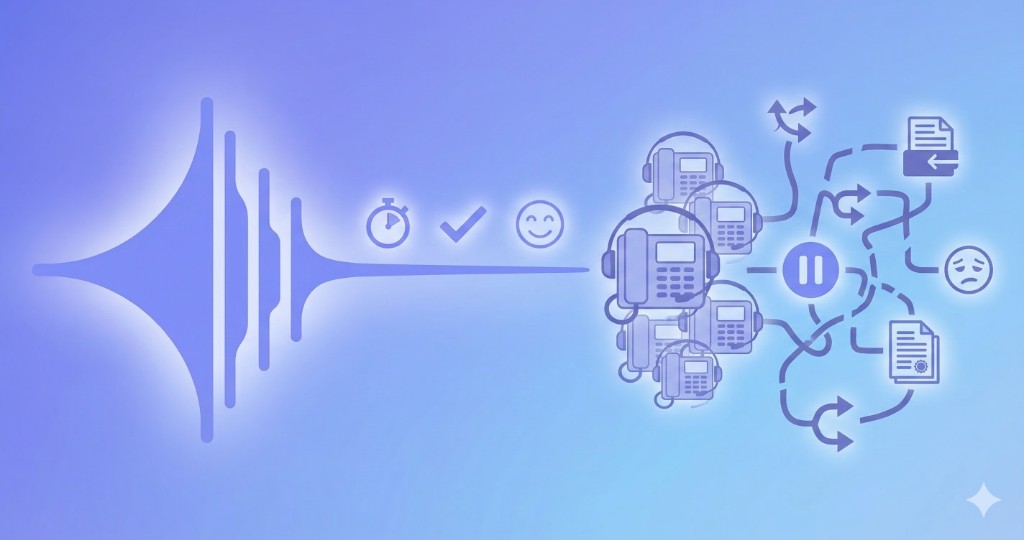
Most self storage operators know roughly what they pay their call center. They know the monthly invoice or the per-call rate. What they don't always account for is what those calls are actually about — and how many of them never needed a human at all.
This is the hidden cost of the call center model for self storage: you're paying for consistency on the easy calls, and getting inconsistency on the hard ones.
What Your Tenants Are Actually Calling About
Let's start with the data. Across thousands of real calls at self storage facilities, the breakdown looks roughly like this:
- ~1 in 3 calls is about payments or billing. Tenants calling to make a payment, update a card, or ask about a charge on their account.
- ~1 in 4 calls is a general inquiry. Hours, policies, insurance questions, account information.
- ~1 in 14 calls is a wrong number. Someone dialed incorrectly — and you're paying for that interaction.
- ~1 in 16 calls is a gate or access issue. Forgot a code, code isn't working, need after-hours access.
- ~1 in 16 calls is a new rental inquiry. A prospective tenant asking about availability and pricing.
Look at that list and ask: which of these actually require a trained call center representative?
The answer is: almost none of them. Payment calls follow the same script every time. Gate code calls have a defined resolution path. Wrong numbers need nothing. General inquiries are answered the same way regardless of who answers.
The Problem With Per-Call Pricing
Third-party call centers typically charge on a per-minute or per-call basis. When you're paying $3-5 per call, the math adds up:
- 200 calls/month × $4 average = $800/month
- 500 calls/month × $4 average = $2,000/month
- 1,000 calls/month × $4 average = $4,000/month
But look at what you're paying for: wrong numbers, payment calls that could be automated, gate code requests that an AI can resolve in 30 seconds.
Even setting aside the cost, there's a consistency problem. Call center reps have varying levels of training on your specific facilities. They read from scripts that may not reflect your current promotions or policies. They take messages on calls that could be resolved on the spot.
What the Alternative Looks Like
AI-based phone handling for self storage changes the math in two ways:
First, it handles the automatable calls — completely. Payment calls, gate code requests, general inquiries, wrong numbers — handled without a human, without a transfer, without a per-call charge. The best-performing operators handle nearly 3 in 4 payment calls this way.
Second, the calls that do reach humans reach the right humans, with context. When an AI agent transfers a call to your team, it's already verified the caller, looked up their account, and documented the situation. Your team spends less time on hold, less time gathering information, and more time actually resolving the issue.
The After-Hours Gap
Here's something most operators don't account for: call centers often have limited after-hours coverage. And even when they do, the experience degrades — longer hold times, less-trained agents, instructions to call back during business hours.
About 1 in 3 calls to a self storage facility comes in after business hours — evenings, nights, and weekends. If you're relying on a call center for those calls, you're either paying a premium for after-hours coverage or you're accepting that tenants go to voicemail.
A tenant standing at a gate at 8 PM who can't get in isn't going to wait until morning. They're going to call a competitor. Or they're going to leave a bad review. Or both.
The Staff-Dependent Model
Some operators skip the call center entirely and route calls to facility managers or a shared office line. This is cheaper — until you account for the real cost:
- Manager time diverted from on-site operations to handle routine phone calls
- Inconsistent responses depending on who's available
- Zero coverage outside working hours
- Burnout from fielding the same questions hundreds of times per month
The "staffed" model scales poorly. Every new location you add means more phone volume and more pressure on the same team.
A Different Way to Think About Call Handling
The question isn't "which call center should I use?" It's "which calls actually need a human?"
When you map out your call volume honestly, most of it is routine. Payments, access issues, general inquiries — these follow predictable patterns with defined outcomes. They're the calls that AI handles completely.
What's left? Complex billing disputes. Maintenance emergencies. Rate negotiations. Situations that genuinely benefit from a human conversation. Those should reach a person — and they should reach a person who has context, not someone starting from scratch.
The operators who are running lean, scaling efficiently, and keeping tenant satisfaction high are the ones who've separated these two categories. They've automated the routine and made space for the human where it matters.
What This Looks Like in Practice
One operator using Lumio's AI platform went from $0 to over $6,000/month in new recurring revenue from AI-captured rental leads in 90 days. The AI was answering rental inquiry calls during business hours — while the on-site team was helping in-person customers — and taking soft reservations on the spot. Those leads convert at nearly twice the rate of calls where only contact information is captured.
Another operator — running 11 unmanned storage locations across rural Indiana — uses Lumio as their entire customer service operation. Every call across every location is answered instantly, 24/7. The team doesn't field routine phone calls at all.
These aren't outliers. They're what the alternative to the call center model actually looks like.
Keep Reading
Self Storage Automation Isn't an After-Hours Tool. It's a Business-Hours Tool.
Nearly 9 in 10 payment calls and missed rental leads happen during business hours.
What Is an AI Self Storage Agent?
What an AI agent actually does versus a chatbot or phone tree.
How AI Enrolls Self Storage Tenants in Autopay — On Every Payment Call
The compounding effect that reduces payment call volume month over month.
Ready to see what the alternative looks like for your facilities? [Book a demo](https://www.lumiostorage.com/book-demo) — we'll walk through real data and show you exactly how Lumio handles calls.
Ready to Transform Your Operations?
See how Lumio can help you scale your portfolio without adding headcount.
Book a Demo