

Replacing an Outsourced Call Center — and Winning Back the Rentals It Was Losing
“Removing long hold times from our call center and having calls answered quickly led to a real uptick in our capture percentages and our move-ins.”

— Cliff Moir, VP of Operations, The Storage Center
75%
AI Resolution Rate
70+
Locations Covered
24/7
Phone Coverage
<90
Days to Full Rollout
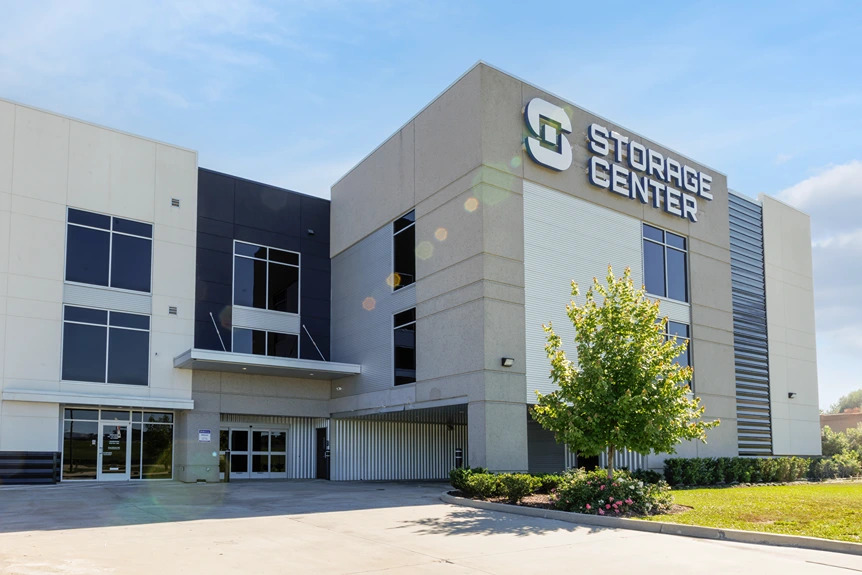
About The Storage Center
The Storage Center is one of the nation's largest privately-owned self-storage operators, with more than 70 facilities across Louisiana, Mississippi, Oklahoma, Texas, Alabama, and Arkansas. The company competes in some of the region's most active storage markets and has built its reputation over nearly two decades on operational discipline and a consistent customer experience.
When leadership decided to modernize their phone channel, they held that standard for whatever solution they chose.
Visit thestoragecenter.comThe Challenge
The outsourced call center knew the industry. It did not know The Storage Center.
For years, The Storage Center had relied on a third-party call center to handle inbound volume. The arrangement covered the basics, but at 70+ locations, the gaps were significant. Outsourced agents lacked the facility-specific knowledge that callers expected, and the customer experience was inconsistent across the portfolio.
The more pressing problem was hold time. Cliff Moir, VP of Operations, noted that at peak periods callers were waiting up to four minutes to reach an agent — leading to abandoned calls and lost rentals. A prospective tenant who waited, gave up, and moved on to the next option on their list was a conversion The Storage Center would never recover. Over a portfolio of 70+ locations, that friction had a measurable revenue impact.
Leadership explored building an internal call center — hiring for product knowledge, brand alignment, and extended coverage. But the staffing model required to cover 70+ facilities without hold times made that path economically unworkable. They began evaluating AI voice solutions — and the evaluation itself was a frustration. Multiple vendors described what their platforms could do. Few were willing to demonstrate it.
“We had a lot of information given, but we weren't really shown very much. There was always a lot of telling us about how it could help us — but no one really showing us how it could help us.”
— Cliff Moir, VP of Operations
Why Lumio
The difference was in the demonstration.
From the first conversation, the approach was different. Lumio walked through real call scenarios — how the AI handles a rental inquiry, routes an after-hours call, and responds when it cannot resolve something. The Storage Center's team could hear the product, not just read about it. Having listened to competing demos by this point, the gap in call quality was evident:
“I've talked to several vendors. I've listened to their AI interactions. Some of which have been very robotic. But these conversations flowed so smoothly.”
— Cliff Moir, VP of Operations
Natural conversation quality was not a secondary consideration. The Storage Center's customers call when they are mid-move, pressed for time, or navigating a stressful situation. An interaction that sounds mechanical or scripted would have undermined the brand's longstanding commitment to service. The requirement was simple: the AI had to sound like someone who actually works there.
Equally important was configurability. The Storage Center's 70+ facilities do not operate from a single template. Fee structures, promotional pricing, unit availability, escalation protocols — each location has its own operational reality. Lumio's ability to ingest The Storage Center's actual SOPs and surface them in the agent's responses was the difference between a generic product and one that could genuinely represent the brand.
“I'd recommend other operators do their homework — until you experience it firsthand, you can't make an educated decision on this. I just had no idea there could be such a difference between one AI product to another.”
— Cliff Moir, VP of Operations
Deploying Across 70+ Locations
Four phases. Full portfolio coverage. Under 90 days.
The Storage Center deployed Lumio in four sequential phases beginning April 2026. Each phase validated performance before the next expanded scope. By July, all facilities were live — eliminating long wait times and voicemail across the portfolio.
Their AI agent handles the full range of inbound interactions:
New Rentals
Prospective tenants receive pricing, availability, and completed reservations — logged straight back into the system of record.
Payments
Existing customers can process payments by phone or via a secure text link, with no staff involvement required.
Gate Access
Callers retrieve gate access information without waiting for someone at the front desk to pick up.
Maintenance & Move-Outs
Maintenance requests and move-out notices are captured, ticketed, and queued — no dropped follow-ups.
After-Hours Escalation
Urgent after-hours situations trigger a notification to the area manager; all other interactions are ticketed and queued for the following morning.
Direct integration with Self Storage Manager (SSM)
Reservations, payments, and follow-up tickets are logged back into SSM automatically — no manual entry, no separate system to reconcile.
The payment agent launched as a pilot across five facilities before expanding to the full portfolio once the first end-of-month billing cycle confirmed the workflow. 130 payments were processed by phone in that initial cycle, with 46 secure payment links delivered by text — no staff involvement required for either.
What Made the Deployment Work
Cliff has been in self-storage since 2007 and has overseen many technology rollouts across a large portfolio. He was specific about what differentiated this one:
“By far, this has been the easiest rollout of any product I've ever done. Your ability to explain what you need from me so you can do your job efficiently was fantastic. I greatly appreciated how well the game plan was laid out for us — and just the efficiency of the entire process.”
— Cliff Moir, VP of Operations
The phased structure let the team validate performance incrementally before expanding. The SSM integration meant store operations were unchanged — Lumio plugged into the system the team already relied on. And a standing cadence of biweekly syncs allowed the configuration to evolve continuously: payment workflow refinements, emergency contact updates, auto-pay enrollment, seasonal hour adjustments.
At the operations level, visibility into every call across the portfolio is central to how Cliff evaluates the platform. Lumio's Lighthouse — the platform's AI operations layer — connects call data, FMS records, and facility SOPs into a single view of how the operation is performing. It surfaces patterns across the call log: which call types are recurring, where the agent can be refined, what the data suggests about customer behavior. Those findings translate directly into agent improvements over time, so the system answering calls in month six is more capable than the one that launched in month one. The platform is not static. It gets better the longer it runs.
“I don't think I would have the right amount of visibility to say ‘this is a great product’ without your dashboard. That's the layer which really makes me understand how much is actually being accomplished behind the scenes. That's huge for me.”
— Cliff Moir, VP of Operations
The Results
Since go-live, The Storage Center has seen consistent, measurable improvement across every dimension of call operations. In the first full month of Lumio deployed portfolio-wide, Cliff noted a significant improvement in June year-over-year rental capture.
With every inbound call now handled immediately, the callers who would have waited four minutes and hung up were instead connected, answered, and in many cases converted. Cliff attributes the improvement directly to that shift: remove the hold-time friction, and the rentals that were slipping away start closing.
Over the last 30 days
399 after-hours calls answered
Every one reached a live AI agent. No voicemail, no missed opportunities outside business hours.
75% AI resolution rate
Three out of four calls handled without a live transfer, across the full portfolio.
16 after-hours rentals captured
With no one in the office and no live sales coverage, the AI captured 16 new rentals in the last 30 days — inquiries that had no other point of contact. That's $2,183 in new monthly recurring rent, or roughly $39,300 in expected lifetime value at an 18-month average tenancy — revenue that previously would have gone unanswered.
239 phone payments processed
Including 17 autopay enrollments — recurring revenue secured without any staff involvement.
In Summary
The Storage Center did not pursue an AI voice solution as a technology initiative. They pursued it to solve a specific, quantifiable problem: calls being abandoned because hold times were too long, and an outsourced provider that could not represent their brand with the depth their customers expected.
What they found was a product that performs at the level their brand requires — and a deployment process that matched the operational precision they hold themselves to.