

87% AI Call Resolution — and Six Figures Out of the Payroll Line
“One saved lead pays for Lumio five times over.”

— John Bauer, VP of Facility Operations & Performance, SKS Management
47→87%
AI Resolution in 7 Months
$100K+
In Saved Expenses
32
Facilities Covered
24/7
Phone Coverage
About SKS Management
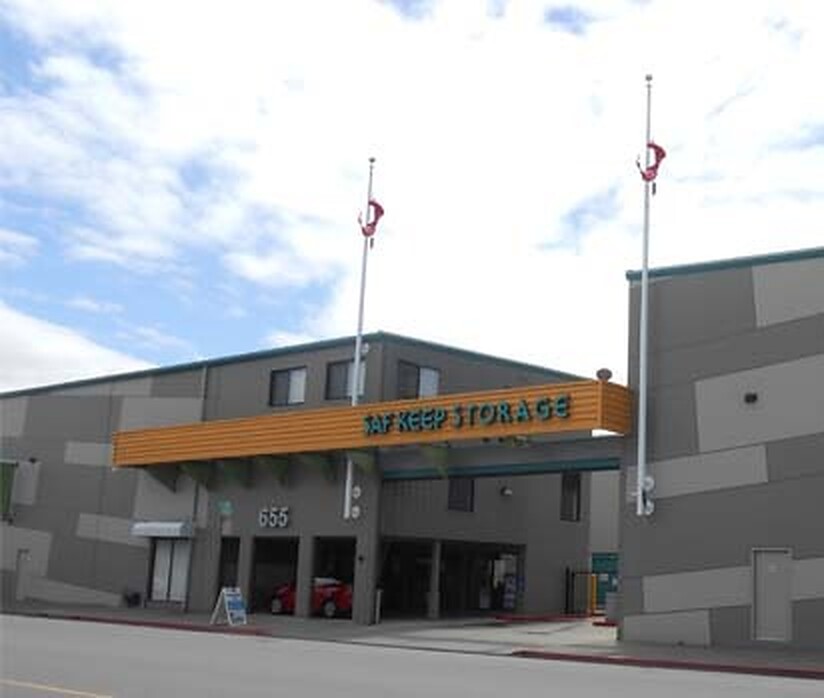
SKS Management operates the Saf Keep Storage portfolio and its affiliated brands — Acorn Self Storage, Peninsula Storage Center, Power Self Storage, Marinship, Ellis, and Budget Mini — across California, Nevada, and Hawaii. The properties range from small 300-unit sites to 1,700-unit facilities in some of the most competitive storage markets in the country: Los Angeles, San Francisco, and San Jose.
SKS runs a hybrid staffing model: on-site managers at each property, backed by a company-owned call center operating 8:30 AM to 8:30 PM Pacific. The company also runs its technology stack in-house, with a small operations team managing the FMS, insurance compliance, revenue management, and reporting.
That combination — staffed properties, an internal call center, and an operations group that builds its own systems — set a high bar. SKS did not need someone to answer the phone. They needed something that could extend what they had already built.
The Challenge
Overflow calls the team couldn't get to during business hours. And no coverage at all once the call center closed.
The training treadmill
Call center agents turn over. It is the structural reality of the channel, and it is expensive in a way that never shows up as a line item: every departure triggers a hiring cycle, a training cycle, and a period where answer rates dip while a new agent comes up to speed. Multiply that across a portfolio and a company is perpetually paying to teach someone the same thing it taught someone else six months ago.
“We were running into staffing issues and we really wanted to have an instant stop-gap. Say somebody doesn't come in at the store — we can at least have an AI agent servicing calls. On top of that, we were also having some challenges with keeping our call center agents on a consistent basis, so we're constantly turning them over.”
— John Bauer, VP of Facility Operations & Performance
SKS wanted capacity that could absorb volume the moment a seat went empty — without another onboarding class.
Overflow during the day, silence at night
The call center's 8:30-to-8:30 window covered the middle of the day well and the edges not at all. Callers in the early morning and late evening reached nothing.
Inside business hours the problem was different: volume, not absence. Store managers field calls between everything else the job requires — showings, move-ins, lock checks, cleanouts. When two calls land at once, someone gets picked up second. In practice, the caller already in the system tends to get answered, because they are standing in front of the manager or already on the line about an account issue. The prospect shopping three facilities in a browser tab does not wait.
“The teams are caught up in their day-to-day duties and a call comes in that they're not able to answer right away, because they're dealing with somebody's account balance. Well, that's already a customer that we have — and we don't want to miss the new ones. With Lumio we're able to capture those leads. And one saved lead pays for Lumio five times over.”
— John Bauer, VP of Facility Operations & Performance
That is the overflow gap: not calls nobody answered, but calls answered second. In storage, second is the same as never.
No system of record for what happened next
The third problem only became visible once someone named it. When a call generated a follow-up — a lead to call back, an issue to resolve — there was no shared place for it to live.
“Our previous method of tracking and following up with leads lacked transparency. We just had to trust that the managers were following the right process.”
— David Doget, Business Operations & Systems Lead
Leads were written on paper at the store. Callback reminders lived on individual managers' personal calendars. Most of the work got done. But nobody at the corporate level could tell the difference between a lead that was worked and a lead that was lost.
Why Lumio
Expectations were low. The voice changed that.
John had encountered enterprise voice AI before — at hospitals, at phone companies — and found the same failure mode every time: a decision tree that eventually trapped the caller in a loop. He went into the evaluation expecting more of the same. What changed his assessment was interaction quality.
“Lumio puts out a really good balance. When our agent, Morgan, talks back to them, he's clear, concise, and he gets the answer a lot faster than our teams do. And he just doesn't sound like a robot. It's a nice blend of having a very efficient machine in tandem with some of the human elements — and that's hands above the other ones I've come across. My initial expectations were pretty mediocre. What I've seen with how it's performed has exceeded them.”
— John Bauer, VP of Facility Operations & Performance
The argument that carried the decision internally was training economics — the answer to the treadmill.
“That's the beauty of it. We train our Morgan once and he's good to go — and he keeps learning. He keeps learning on a better track than a human sometimes could, because he really retains everything. It's a one-and-done thing; it goes in and it's set. He's always there, and my gosh — he can be at five locations at once.”
— John Bauer, VP of Facility Operations & Performance
Built Around SKS's Playbook, Not Lumio's Template
SKS went live with Lumio at their first facility in January 2026 and then expanded across the rest of their portfolio over the following seven months. Lumio integrates directly with Self Storage Manager (SSM) for live unit inventory, pricing, tenant records, and ledger data — so every quote, availability check, balance, and account update happens against real-time data rather than a static knowledge base.
Morgan, SKS's agent, is the front door on every line, at every property, at every hour. He handles the call end to end by default, and routing is configured around the handful of situations where SKS wants a specific person involved — an auction bidder who needs the auction coordinator, a legacy insurance claim that belongs with the claims desk. Those are SKS's rules, encoded once and applied consistently across the portfolio. Outside call center hours, Morgan operates the phone channel entirely on his own, 24/7.
But the routing map is the easy part. The reason this deployment works is what sits on top of it.
Custom skills: the operator's SOPs, not the vendor's
Most voice AI products in self-storage ship a fixed menu — rentals, payments, hours, access — and ask the operator to run their business inside it. Anything the product doesn't already do becomes a transfer, and any program that makes the operator distinctive becomes invisible on the phone.
Lumio's model inverts that. Skills are authored per customer, against that customer's actual standard operating procedures — each one with its own trigger conditions, qualifying questions, business rules, and escalation logic. Seven were built specifically for SKS:
SKS Move-In Truck Program
Confirms new-tenant eligibility, checks van availability against the reservation calendar, books the slot, explains the first-20-miles-free terms and driver requirements, and sends written confirmation — the full booking, on the call.
Free Package Placement Service
Captures carrier, expected delivery window, and unit number for business tenants receiving inbound freight; verifies access permissions and routes placement instructions to on-site staff.
Facility Call Back
Recognizes a caller returning a missed call from the property, retrieves the open item tied to their account, and either resolves it directly or reconnects them to the right person with full context attached.
Referral Program
Qualifies the referring tenant, captures the referred party's details, applies the $50 credit against the correct ledger, and confirms terms to both sides.
Needs Assistance Opening Door
Distinguishes a jammed latch from an overlock from a tenant at the wrong unit, walks through resolution steps, and escalates as a maintenance item only when it is genuinely one.
Emergency
Triages fire, break-in, elevator malfunction, pipe burst, and loitering against SKS's severity rules and triggers the correct escalation path immediately, bypassing all normal queuing.
Insurance Claim
Determines coverage type, captures incident detail and date of loss, and routes a structured claim intake to the responsible party.
None of these exist in a generic storage voice product. Several are competitive differentiators SKS spent years building — the free move-in truck is a closing tool their sales teams lead with, and the package placement service is a genuine amenity for the business tenants who anchor several of their urban properties.
Before Lumio, those programs were only sellable when a human happened to answer. Now the move-in truck skill fires on inbound calls and Morgan books the van directly — including at 11 PM on a Sunday, when the differentiator would otherwise have gone unmentioned.
The design principle is simple: Lumio meets the operator where they are rather than requiring the operator to conform to the product. Morgan is configured to be an extension of the SKS playbook — same programs, same policies, same escalation logic the field teams already follow.
Cross-selling the portfolio when a location sells out
One of the sharpest examples of that customization is inventory routing between properties.
The Melrose and San Fernando locations sit roughly four miles apart in Los Angeles. They are not interchangeable, and the differences are encoded in Morgan's context: San Fernando has dedicated vehicle parking, smart locks, and tractor-trailer access; Melrose has larger drive-up units, inside-hallway units, and free carry-in service during office hours.
When a caller wants a size Melrose doesn't have available, the default outcome across the industry is a lost rental — the prospect hangs up and calls the operator down the street. Morgan instead offers the San Fernando location, explains what is different about it, and keeps the rental inside the portfolio.
For a multi-property operator, this is a direct revenue mechanic. Every sold-out unit type at one location becomes a cross-sell opportunity at another, executed automatically, on every call, at every hour — with enough site-level nuance that the recommendation is actually useful rather than a generic “we have another location nearby.” That level of specificity is not something a one-size-fits-all agent can offer, because it requires the vendor to sit down and learn the portfolio.
Results: A System That Gets Better
The headline result is not the number. It is the slope.
Jan 14 – Mar 31, 2026 · Pilot
46.6%
AI Resolution Rate
Jul 4 – Aug 3, 2026 · Last 30 Days
87.0%
AI Resolution Rate
SKS's AI resolution rate nearly doubled over seven months — from 46.6% in the pilot to 87.0% today.
That curve is the product working as designed. Lumio's platform is built around continuous improvement: every call is analyzed, gaps surface as structured feedback, and configuration is updated against what actually happened on the phone rather than what someone assumed would happen. Missed intents become new skills. Ambiguous policies get clarified. Facility-level exceptions get pinned so an org-wide default can't override them.
Over seven months the SKS deployment absorbed dozens of those changes — gate-access scenarios pinned per property, new-tenant and fallback access paths added where callers previously got no useful response, hours and access windows verified property by property across three time zones, and seven custom skills built from scratch.
The agent answering calls in month seven is a materially different agent than the one that launched. That is the direction of travel: every cycle moves the deployment further toward full autonomy, and the resolution rate is the scoreboard.
The Business Case: One Manager Instead of Two
This is where the deployment pays for itself several times over.
SKS is transitioning two properties to a hybrid-remote staffing model. Rather than staffing each with its own manager, one manager now splits the week between them — three days at the first location, two at the second — with Morgan and the call center covering the remaining days and all after-hours volume.
“That will allow us to have a manager at one location for three days and the other location for two days, and Morgan and the call center fill in on those other days. Instead of hiring two managers, the plan is just to hire one. And in addition to the payroll cost savings at the store level, we're able to use Morgan as overflow for our call center — so we don't have to hire the new call center agent that we had planned to hire.”
— John Bauer, VP of Facility Operations & Performance
Fully loaded payroll for a single staffed location can run north of six figures annually. Eliminating one of those roles removes that cost from the operating budget permanently. SKS has also avoided adding a call center agent since deployment.
For a storage operator, that is not a soft efficiency. It is a direct, recurring reduction in operating expense:
It flows straight to NOI
Payroll is one of the largest controllable line items at the property level. Removing a role without reducing coverage improves net operating income dollar for dollar.
It compounds into valuation
At prevailing cap rates, a six-figure annual NOI improvement translates into a meaningful increase in asset value across the affected properties — before counting a single incremental rental.
It improves cash flow immediately
Unlike revenue initiatives that take quarters to prove out, an avoided hire is realized the month the decision is made.
It scales
The model SKS is piloting at two properties is repeatable at every small-format location in the portfolio.
The critical detail is that this is not cost-cutting. SKS did not reduce service to save money — coverage went up, from a 12-hour staffed window to 24/7, at the same time headcount went down.
Morgan absorbed the hours a second manager and an additional call center agent would have covered, and did it at a fraction of the cost. There was also an unplanned signal that the model has more room in it:
“Some of our team members were saying they were getting bored, not as many calls were coming in. That was an indicator to me that maybe we don't need to hire a new employee if Lumio and the call center are lightening the load on our teams; we can let attrition happen. That's always good to have in the back of our minds.”
— John Bauer, VP of Facility Operations & Performance
When the field reports excess capacity, the next several hires become optional. That is the compounding version of the same saving.
Revenue: Rentals, Income, and Occupancy All Up
The cost side is only half of it. Since deploying Lumio, SKS has posted portfolio-wide gains across every metric that matters.
“We have seen a lift in our income, our rentals, and our occupancy... I know for a fact that Morgan has saved more than a couple of prospects that have called in. I love that he sends the link to the customer so they can start the online rental process right away. I've seen the conversion happen — I'll follow it, I'll see the prospect's name, and then find them in our FMS as a new tenant.”
— John Bauer, VP of Facility Operations & Performance
The mechanism is straightforward, and it is the one John identified before the project started: every overflow call Morgan catches during business hours, and every after-hours call Morgan converts, is a rental that previously went to voicemail or to a competitor. Rental inquiries now get resolved on the call, and Morgan sends the move-in link while the prospect is still engaged.
Leadership has been able to trace individual prospects from Morgan's call through to a completed move-in. Multiply that across the portfolio and every hour of the day, and the direction of the numbers stops being a coincidence.
Against a cost of roughly one saved lead per month, per facility, the return does not require a spreadsheet.
Payments: Automation That Feels Like a Person
SKS already had a payment IVR through SSM. On paper, phone payments were a solved problem.
In practice, tenants still route around it. They press zero. They wait for the menu to time out. They call the store line directly. Automated payment menus are the single most avoided piece of technology in self-storage, because tenants calling about money want reassurance that a person heard them — that the payment landed, that the late fee is handled, that the unit is not going to auction. So the calls the IVR was built to absorb landed on staff anyway, all day, every day.
Lumio's dedicated payment agent changed that. The reason it works where the IVR didn't is that Morgan is not a menu.
Tenants get the conversation they were calling for — someone who confirms the balance, answers the question underneath the payment, and tells them it went through — while the transaction itself is fully automated. The tenant gets the human experience. SKS gets the automation.
And Morgan handles the cases an IVR structurally cannot. A tenant with a past-due balance called to pay it across two different cards — a split-tender transaction with a partial authorization on the first card and the remainder on the second, each with its own billing address, each needing a separate autopay decision. That call is an instant transfer on any menu-driven system, and a ten-minute manual process for a store manager. Morgan processed both cards, confirmed each amount, honored the tenant's decision to decline autopay on both, and closed the call — start to finish, without a person.
The Accountability Layer
Coverage was what SKS bought. Visibility is what changed how they manage.
Before Lumio, a call that needed follow-up left no trace a corporate operator could audit — a note on a paper tracker, or a reminder on one manager's personal calendar. The work usually got done. “Usually” was the only assurance available.
Now every call Morgan handles that needs human follow-up generates a ticket, routed to the responsible manager, timestamped, and visible from corporate.
“I love that, because it creates accountability and we're able to track it. It has provided confidence in the executive team to know that the calls that go through are handled professionally and followed up within a reasonable time. I know that sometimes the team members may cross wires with other team members and calls would fall through the cracks. And then you get a customer calling back saying, ‘I talked to someone last week, and nobody called me back.’ Now, when the customer encounters Morgan, a ticket is created, and someone is tasked to follow up with that customer.”
— John Bauer, VP of Facility Operations & Performance
David Doget, who runs SKS's systems and reporting, has built a weekly management ritual on top of it — pulling the ticket dashboard every Monday and turning it into the follow-up communication that goes out to the field. For him the value is less about any individual ticket than about what the aggregate view makes visible: whether the field is executing, at which locations, and how quickly.
“The tickets dashboard I just love, because it gives me a global view of: is my team executing? Is my team following up? This morning I opened it up and there were four tickets that needed to be addressed. That transparency also creates accountability.”
— David Doget, Business Operations & Systems Lead
SKS bought phone coverage. What they got alongside it was a system of record for everything the phone channel produces — and the lead tracker finally moved off paper.
Four Calls
A 10 PM rental, closed.
Saf Keep Melrose, 10:02 PM
A caller asked to rent a unit well after the office closed. Morgan quoted two options — an upper-level unit at $130 and an inside hallway unit at $99, both with 50% off the first two months — and the caller chose the hallway unit for a Saturday move-in. Then came an objection: they had rented and moved out from this facility before, and worried that disqualified them. Morgan confirmed it did not, and completed the reservation. Under the previous model this call reached nothing at all.
The call that arrived four minutes too late.
Saf Keep Melrose, 6:04 PM
A caller wanted to store a queen mattress and boxes, and asked to see the unit right away. The office had closed at 6:00. Morgan quoted a 5x10 at $180 with 50% off the first two months, explained the office reopened at 9 AM, and booked the visit for the next morning. Four minutes earlier, a manager takes this call. Four minutes later, it used to be a voicemail — and often a competitor.
A reservation converted, and a truck booked with it.
Saf Keep Melrose, 5:07 PM
A prospect called to turn an existing reservation into a firm Saturday move-in for a sofa, mattress, and boxes. Morgan confirmed the correct unit, locked the date, then — triggering SKS's custom move-in truck skill — reserved the facility's moving van and texted over the details. Two workflows, one call, no staff involvement.
A lockout resolved without pulling a manager off the floor.
Saf Keep Gardena, early evening
A tenant couldn't get through the gate and assumed his unit number was his access code. Morgan explained that the two are different, walked him through the star-code-pound entry format, and sent his permanent gate code by secure text. Resolved in under three minutes. Previously this call interrupts a manager mid-showing — or, after hours, doesn't get answered at all.
Key Takeaways
One manager instead of two.
SKS removed a new facility manager role from its staffing plan and also avoided hiring a new call center agent — all while actually increasing coverage. A permanent six-figure reduction in annual payroll that flows directly to NOI.
Coverage went up while headcount went down.
A 12-hour staffed window became 24/7 across an entire portfolio in three different time zones. Overflow calls during business hours get answered; after-hours calls reach a full-capability agent instead of voicemail.
The agent gets better every month.
46.6% AI resolution in the pilot, 87.0% today. Continuous feedback and configuration turn every call into an input, and every cycle moves the deployment closer to autonomy.
Automation only works if it doesn't feel like automation.
SKS had a payment IVR that tenants routed around. Morgan gives them the conversation they were calling for while automating the transaction underneath it — so the calls staff used to absorb no longer reach staff at all.
The playbook stayed SKS's.
Seven custom skills — the move-in truck, package placement, the referral program — mean the phone channel sells what makes SKS different, instead of flattening it into a generic script.
In Summary
SKS Management did not have a broken phone channel. They had a good one — a company-owned call center, staffed properties, and an operations team that builds its own tooling. What they needed was extra capacity to catch the overflow calls their teams couldn't get to during business hours, and full coverage once the call center closed for the night.
Seven months in, Morgan resolves 87% of calls without a human, works every hour of every day across three time zones, takes payments tenants used to refuse to make through an IVR, cross-sells between properties when a location sells out, books the move-in truck, and creates a ticket somebody has to close. Coverage expanded. Payroll came down by a six-figure annual sum. Rentals, income, and occupancy all moved up.
SKS went looking for a stop-gap — something to cover a shift when an agent left or a manager didn't make it in. What they built instead is infrastructure. A stop-gap is something you use until the real fix arrives. Seven months in, this is the real fix.